Originally developed by QuesTek using Integrated Computational Materials Engineering (ICME), Ferrium® M54 was built for demanding aerospace and naval aviation systems, including carrier-based aircraft landing gear where components must survive extreme loads and repeated shock. The alloy was engineered to balance strength, hardness, toughness, and fatigue resistance so critical components can withstand punishing service conditions. As it turns out, the ability to endure repeated shock and resist fracture would prove useful in another arena.
With its proven strength and durability in some of the harshest engineering environments, the material eventually found its way into a very different proving ground: combat robotics.
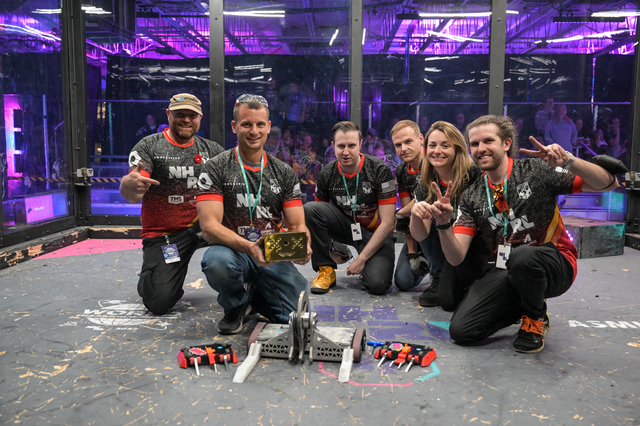
The team behind Emulsifier, a heavyweight vertical spinner built for violent weapon-on-weapon exchanges, had been wrestling with a familiar challenge: how to build a weapon disc that could hit as hard as possible while still surviving the impacts it delivered. Materials in this environment come with tradeoffs. AR500 steel offers toughness but gradually wears and deforms under repeated impacts. S7 tool steel can push hardness higher, but doing so introduces the very real risk of fracture. Early on, the team made a practical decision many builders recognize, better a weapon that bends than one that shatters.
Still, the Emulsifier builders continued looking for material that could deliver both high hardness and real fracture resistance, something capable of absorbing violent impacts without needing replacement every few fights.
Eventually, that search led them to QuesTek’s Ferrium® M54.
Through a connection with QuesTek, the Emulsifier team obtained a scrap plate of M54 and treated it with the same care they apply to every major design decision. The plate was heat treated precisely to specification, Blanchard ground for flatness, and waterjet cut into the weapon disc before being integrated into the robot.
Then it went into the arena.
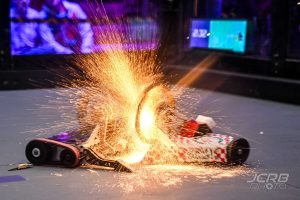
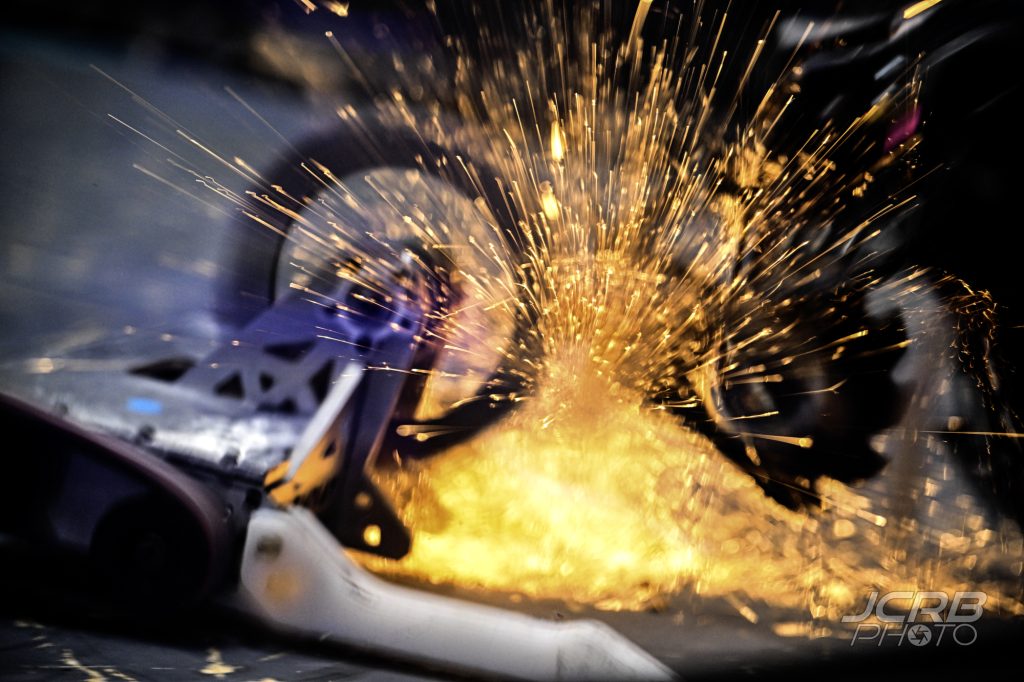
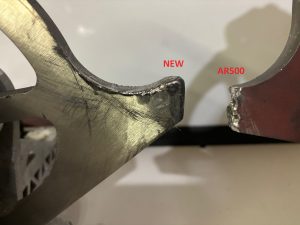
The first real test came against Lil Rip, whose weapon was made from AR500, the same steel Emulsifier had used in earlier seasons. When the weapons collided, the difference became immediately clear. After several violent exchanges, Emulsifier’s disc carved a deep gouge into the opposing weapon while their own disc showed minimal damage. There were no cracks, no chips, and no signs of catastrophic failure.
At the time, the team decided to keep this new weapon a secret to keep their edge. It went on to do major damage to some of the other most feared weapons in the world, distorting last year’s #1 ranked ‘Ares’ beater bar weapon and later taking huge chunks out of their S7 weapon in a rematch.
Fight after fight against AR500, S7, and other alloy steels, the M54 disc continued to perform. Nearly thirty matches later, the same weapon disc remains in service, something that would have been unlikely with the materials used in earlier builds.
Of course, materials alone don’t win fights. The Emulsifier team’s design decisions, driving strategy, and relentless testing ultimately determine the outcome. But the alloy gave them something every combat robotics team values: confidence. The confidence to withstand brutal exchanges, push harder against other spinners, and focus on tactics instead of worrying about weapon failure.
Emulsifier’s success reflects what happens when smart engineering meets the right material. In this case, a high-performance alloy designed for naval aviation quietly found a second life spinning at full speed inside a fighting robot.
Stories like this highlight what materials engineers have long understood: when alloys are designed using physics-based tools rather than discovered through trial and error, they often find value far beyond their original application. Ferrium® M54 was created for the extreme demands of aerospace and naval aviation, but its performance in combat robotics hints at the broader potential of computational materials design.
Today, QuesTek continues applying the same ICME-driven approach across aerospace, defense, energy, and advanced manufacturing, engineering materials intentionally so they perform wherever extreme conditions demand them.